
Programs
Equipment that helps
people participate.
Our programs focus on practical mobility support for people who cannot reasonably access needed equipment on their own.
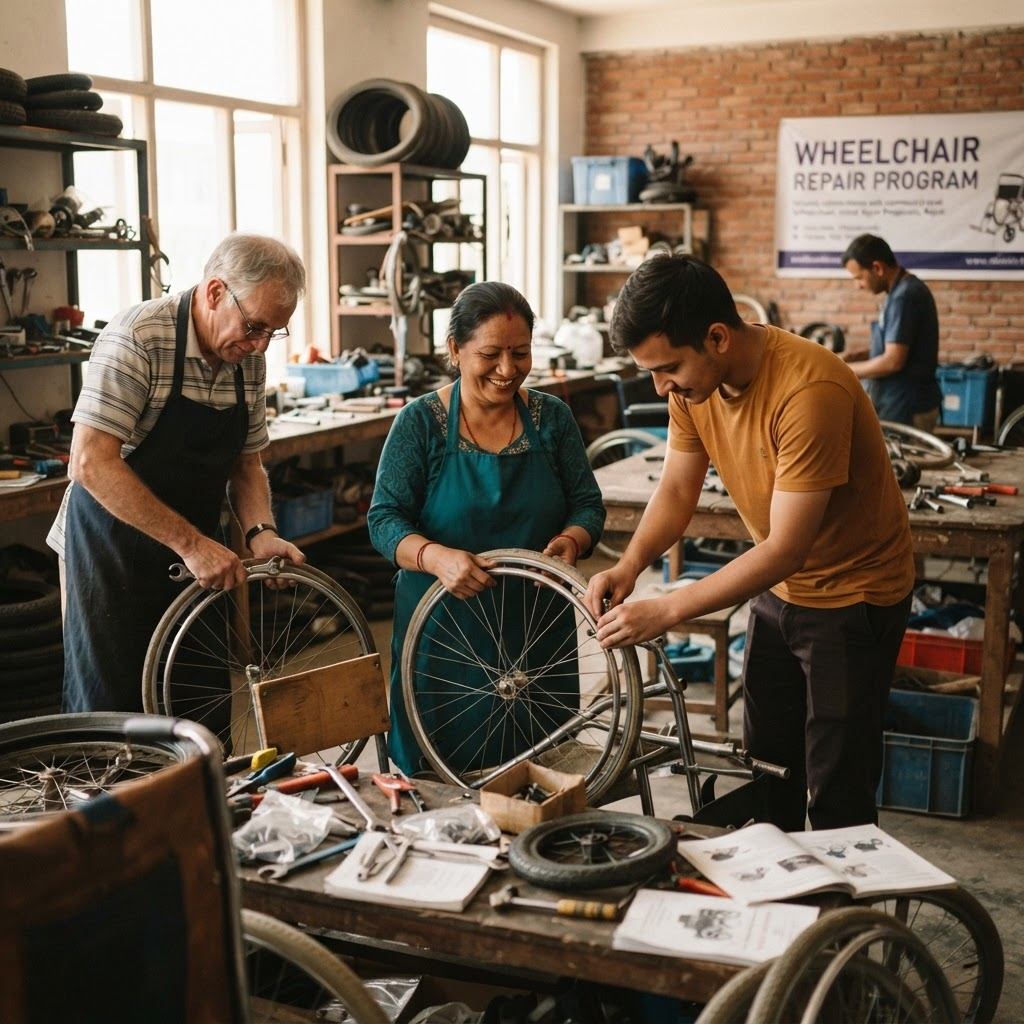
What we support
Mobility equipment, delivered with dignity.
Free Mobility is building a practical equipment program for people who need a wheelchair or other mobility aid but cannot obtain one through insurance, savings, or local resources. A mobility device is more than a piece of equipment. It can make it possible to attend a medical appointment, return to work, visit family, participate in school, or simply move around the home with greater confidence. Our goal is to meet each request with care rather than treating people like numbers in a queue.
We work toward providing wheelchairs and other appropriate mobility equipment based on individual need, fit, safety, and available resources. Every person has a different body, environment, routine, and support network. That is why we do not believe a one-size-fits-all approach is responsible. We ask clear questions, review the information provided, and seek practical guidance where it is available so that the equipment we help provide is useful in everyday life.
How the program works
The process begins with an application. Applicants tell us about their mobility needs, living situation, current equipment, and the barriers preventing them from getting appropriate support. Families, caregivers, clinicians, social workers, and community organizations may help someone complete the form. We review applications as thoughtfully as possible and contact applicants when clarification is needed. A complete application helps us understand urgency, suitability, and the best next step.
When a request can be supported, our team works through equipment availability, condition, transportation, and delivery planning. Depending on the circumstances, support may involve a new or gently used wheelchair, a mobility aid from a trusted partner, or a referral to another organization better positioned to help. We are honest when resources are limited. A respectful answer, clear explanation, and useful referral are better than a promise we cannot keep.
Community connections
Referrals from clinicians, social workers, community organizations, and families help us learn where support is needed. Partnerships also help us make better decisions about delivery and follow-up. A local hospital may know that a patient is leaving rehabilitation without equipment. A senior center may understand that several residents are isolated because their chairs are unsafe. A disability advocate may point us toward a rural community that is often overlooked. Listening to these partners helps us direct limited resources where they can make a meaningful difference.
We want the program to be accessible without unnecessary paperwork or shame. Needing mobility equipment is not a personal failure, and asking for help should not require someone to prove their worth. We do need enough information to make responsible decisions, protect donated resources, and coordinate safely. We aim to explain why we ask each question, keep information handled carefully, and communicate clearly throughout the process.
More than delivery
A successful delivery is an important moment, but it is not the whole outcome. Equipment needs to arrive in usable condition, fit the recipient's situation, and be accompanied by understandable information. Where possible, we encourage recipients and families to discuss fit, safe use, transfers, maintenance, and accessibility with a qualified professional. We do not replace clinical advice. Our role is to help close an access gap and connect people with the resources that support safe independence.
We are also learning how to strengthen follow-up. A chair that works today may need a repair later. A person's circumstances may change after surgery, illness, or a move. Future program development will include stronger repair referrals, better delivery coordination, and clearer check-ins so we can learn whether equipment is helping people participate more fully. Those lessons will shape how we spend donations and how we design partnerships.
Growing responsibly
Demand for mobility support is real, but growth must be responsible. We intend to expand through clear eligibility information, documented decisions, reliable partners, and transparent reporting rather than making promises that outpace our capacity. Donations support the broader mobility fund, including equipment, transport, communications, administration, and the systems required to serve people consistently. Responsible operating costs are part of responsible service.
As the program develops, we will share what we are learning: how many requests we receive, where applicants live, what kinds of equipment are needed, how long decisions take, and where our process can improve. We will protect personal information and share only appropriate summaries. Transparency is not a marketing claim; it is a practice that helps donors, applicants, and partners understand the work.
How you can help
Donors make equipment access possible. Volunteers help with outreach, logistics, research, and community relationships. Clinicians and advocates help us understand need. Organizations can refer applicants, share trusted resources, or collaborate on delivery and repair. Every contribution is most useful when it is connected to a clear purpose and followed by accountability.
If you or someone you know needs a wheelchair, begin with the application so we can learn more about the situation. If you are a potential partner, tell us what your community sees and what kind of collaboration would be practical. The program is being built one careful decision at a time, with the belief that mobility support should lead to more participation, more connection, and more freedom in daily life.
Apply for support Partner with us